Estate Pipe Restoration – 10 Things to Check Before You Hit “Buy” on That Vintage Pipe
Estate Pipe Restoration – 10 Things to Check Before You Hit “Buy” on That Vintage Pipe
We’ve all been there, haven’t we? You’re scrolling through an auction site late at night, or maybe you’re poking through a dusty bin at the local antique mall, and there it is. A classic shape, a beautiful grain peeking through the grime, and a price that feels like a total steal. Your heart starts racing just a little bit. You can already see it cleaned up, sitting in your rack, and ready for a relaxing evening on the porch.
But before you hit that “Buy It Now” button or hand over your hard-earned cash, we need to talk about the reality of estate pipe restoration. Buying a “new-to-you” vintage pipe is a bit like buying a classic car; some need a wash and an oil change, while others are essentially a pile of rust held together by hope.
If you are new to this whole world, welcome! It’s a fantastic hobby, but it can be a little intimidating at first. We love seeing people dive into beginner pipe smoking and vintage collecting, but we don’t want you to end up with a “wall hanger” that can’t actually be smoked.
So, let’s go through the checklist we use here at Briarville when we’re eyeing a potential treasure.
Here are 10 things to check to ensure your vintage find is a candidate for successful smoking pipe restoration.
1. The Dreaded Burnout
This is the big one. If a pipe has a “burnout,” it means the briar has actually burned through or has a significant weak spot in the bowl wall. It usually looks like a dark, charred spot on the outside or a deep, soft pit on the inside. Check the interior walls of the bowl carefully. If the seller’s photos are blurry or don’t show the inside of the chamber, ask for more. A pipe with a hole in it is a paperweight, not a smoker. Always look for
spiderweb-like cracks or soft spots in the wood. If you see a hole, walk away.
2. Stem Oxidation (The Green Gunk)
You’ve probably seen it: a stem that looks more like a moldy piece of lime than a sleek black mouthpiece. This is oxidation, and it happens to vulcanite stems over time when they’re exposed to light and air.
While it looks just gross, the good news is that most oxidation can be cleaned up during the pipe restoration process. However, if the oxidation is incredibly deep, it might have made the material brittle. If the stem is beyond saving, you’re looking at a full pipe stem replacement, which we handle all the time here at the shop. Check out our guide on vulcanite stem oxidation to see what you’re dealing with.
While some folks enjoy a dedicated pipe for specific blends, most of us want our pipes to taste clean. When those old flavors start clashing with your new tobacco, it ruins the experience. And that’s just the “flavor” side of things. Let’s talk about the stuff that’s actually a bit more concerning.

3. “Lava” on the Rim
When you see a thick, crusty layer of black gunk on the top of the bowl (the rim), we call that “lava.” It’s actually just a mix of tar, spit, and charred tobacco that overflowed.
It looks terrible, but it often acts like a protective layer for the wood underneath. A thick layer of lava usually means the previous owner enjoyed the pipe frequently. We can typically “peel” that back to reveal a perfectly fine rim, but you want to make sure a ham-fisted lighter technique hasn’t badly charred the wood underneath.
4. Cracked Shanks and Mortises
The shank is the “neck” of the pipe that connects the bowl to the stem. This area is under a lot of stress. Look closely for hairline cracks, especially where the stem inserts into the wood.
If you see a metal band around the shank, be a little suspicious. Sometimes bands are added for decoration, but often they’re there to hold a crack together. A cracked shank isn’t necessarily a death sentence; we do amazing work with silver and nickel bands to stabilize them, but it’s something you should know before you buy.
5. Ghosting (The Ghost of Tobaccos Past)
Have you ever bought a pipe that looked great, but every time you smoked it, all you could taste was 40-year-old cherry syrup or heavy lakeland floral notes? That’s ghosting.
The oils from previous tobaccos soak into the wood over decades. While we have ways to deep-clean a pipe (our ozone treatment is basically magic), some ghosts are more stubborn than others. If the pipe smells like a perfume factory, you know you’re in for some work. You can read more about the truth about smells and ghosting to see how we tackle it.

6. The “Cake” Situation
A little bit of carbon buildup (the “cake”) is a good thing; it protects the briar. But too much of a good thing is a problem. We’ve seen estate pipes where the cake is so thick you couldn’t fit a pencil in the bowl, let alone tobacco.
The danger here is that carbon and wood expand at different rates when they get hot. If the cake is too thick, it can actually crack the briar bowl as it heats up. Look for pipes with a reasonably thin, even cake, or be prepared to do some careful reaming.
7. Draft Hole Alignment
Take a look down the shank into the bowl. Does the draft hole (the hole where the smoke comes through) enter the bowl at the very bottom? If it’s too high, the pipe will never smoke all the tobacco and will always leave a soggy mess of “dottle” at the bottom.
This is a sign of poor craftsmanship or a factory second. A well-aligned draft hole is the secret to a dry, cool smoke. If it’s way off-center, that pipe might be a “lemon” that no amount of smoking pipe restoration can fully fix.
8. Stem Fit and Tenon Integrity
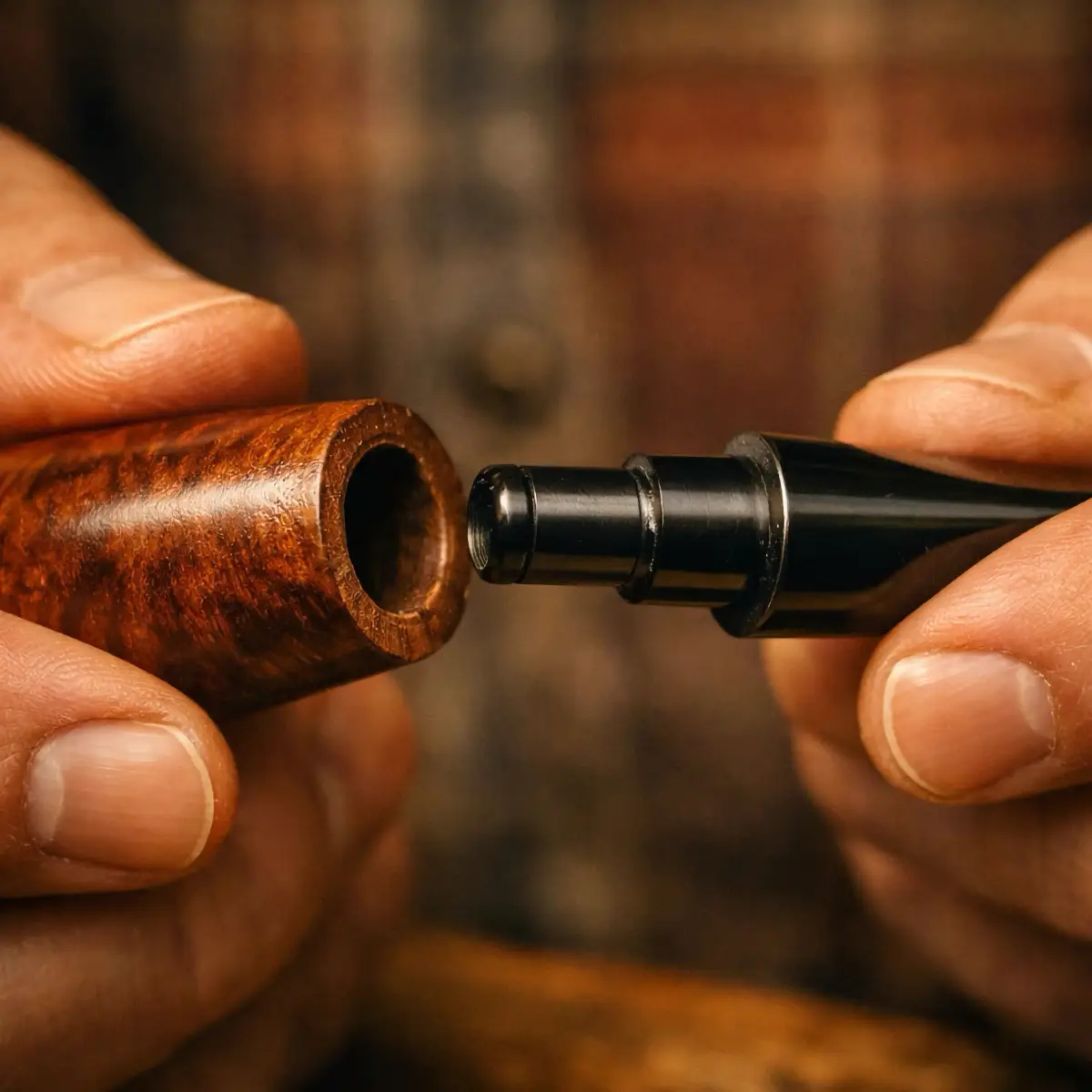
Does the stem fit snugly, or is it flopping around? Or worse, is it stuck? If the stem is stuck, never force it. You’ll snap the tenon right off (the little peg that goes into the shank).
A broken tenon is a common issue with vintage finds, usually requiring a pipe stem replacement or a tenon repair. If you’re buying online, ask the seller whether the stem comes off easily. If they say “I haven’t tried,” assume the worst and bid accordingly! Choosing the right pipe stem replacement can breathe new life into an otherwise dead pipe.
9. Tooth Marks and Chatter
Let’s be real, some pipe smokers are “clenchers.” They bite down hard on that stem. While light “chatter” (tiny surface scratches) can be buffed out easily, deep tooth holes are a different story.
If someone has literally bitten through the vulcanite, the stem is toast. We can sometimes fill smaller divots, but for deep craters, a new stem is usually the more comfortable (and hygienic) route. After all, you don’t want to be feeling someone else’s bite marks every time you fire that baby up.
10. Nomenclature and Brand Value
Finally, look at the “nomenclature”, the stamps and markings on the wood and stem. Are they crisp and readable, or have they been buffed away by years of over-polishing?
For collectors, clear markings are everything. It helps identify the age, the maker, and the value. If you find an old Peterson, for example, knowing how to spot the “Made in the Republic” or “Made in Ireland” stamps can tell you a lot about its history. If you’re looking at a Peterson, we have some great tips for a cleaner smoke that apply to those specific system designs.

But what to do after the find?
Once you’ve done your homework and that “new-to-you” vintage briar arrives in the mail, the real fun begins. You might be tempted to wipe it off and smoke it, but please: don’t. You don’t know where that pipe has been or what might be living in that old cake. (Trust us, we’ve seen things.)
That’s where we come in. Here at Briarville Tobacco Pipe Repair & Restoration, we live for this stuff. We take those “diamond in the rough” estate finds and turn them back into the proud smokers they were meant to be. Whether it’s a deep sanitization, a full stem resurfacing, or a complex shank repair, our goal is to respect the pipe’s history while making it safe and beautiful for you to use.
If you’ve found a treasure and you’re not sure if it’s worth the effort, or if you know it’s a classic that deserves the best care possible, send it our way. We’ve helped thousands of collectors navigate the world of estate pipe restoration after the auction ends.
Buying vintage pipes is a bit of a gamble, but with these 10 tips, you can tilt the odds in your favor.
Happy hunting!