7 Mistakes You’re Making with Vulcanite Stem Oxidation (and How to Fix Them)

Let’s talk about that green monster we all know and hate, vulcanite stem oxidation.
You know what I’m talking about. That nasty greenish-brown color that creeps onto your favorite pipe stems, making them look (and sometimes taste) absolutely terrible. We’ve all been there, staring at a beautiful estate pipe with a stem that looks like it’s been through a swamp.
The thing is, most pipe enthusiasts are accidentally making their oxidation problems *worse* by using methods they found on random forums or heard from a buddy. And honestly? Some of these techniques can permanently damage your pipes.
So let’s clear the air and talk about the seven biggest mistakes people make when dealing with vulcanite oxidation, and more importantly, how to actually fix them.
## Mistake #1: Thinking Bleach or OxyClean Alone Will Do the Job
Here’s the truth bomb: soaking your stems in bleach or OxyClean doesn’t actually remove oxidation.
I know, I know. Half the internet swears by the overnight bleach soak method. But here’s what’s really happening: these solutions only *soften* the oxidation. They don’t remove it.
Think of it like softening paint before scraping it off. The bleach loosens everything, but the oxidized layer is still on your stem. You’ve got to actually remove it mechanically.
[Vulcanite pipe stem showing oxidized green discoloration versus restored black surface]
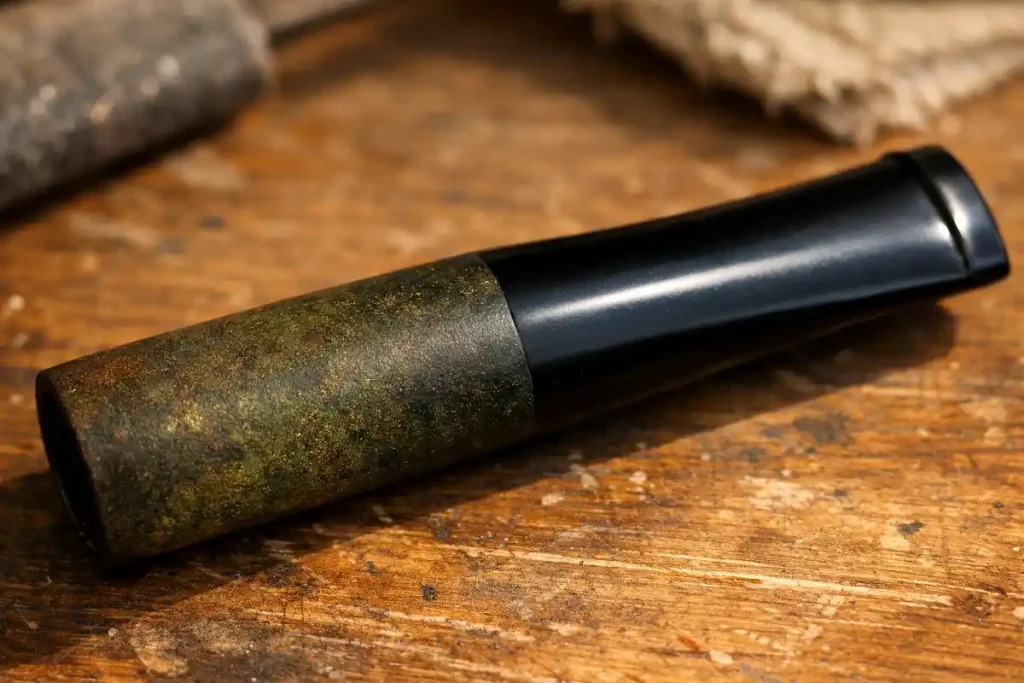
The proper approach? Use the soak as step one, not the entire process. After soaking, you need to sand, buff, and polish to actually remove that oxidation. Skipping the mechanical work is like washing your car with soap but never rinsing it off.
## Mistake #2: Avoiding Abrasion Completely
This one’s connected to mistake number one, but it deserves its own spotlight because it’s so critical.
**The only way to remove heavy vulcanite oxidation is through abrasion. ****
Period.
That means scraping, filing, sanding, buffing, and polishing. No magic chemical dissolves oxidation and leaves your stem pristine. Anyone who tells you otherwise is selling something (or doesn’t know better).
Now, I get it, abrasion sounds scary. You’re worried about damaging your pipe. But here’s the thing: when done correctly with the right products and techniques, it’s the safest and most effective method for pipe stem repair.
At Briarville, we use specialized smoking-pipe repair techniques that remove oxidation without compromising the integrity of your stems. We’ve been doing this long enough to know what works and what causes damage. (Fun fact: we’re the ONLY USA-authorized repair shop for Alfred Dunhill “The White Spot” pipes, so we know what we’re doing.)
## Mistake #3: Creating Surface Pitting with Harsh Chemicals
Here’s where things get messy.
That popular 50/50 bleach-and-water method? It causes pitting and roughening on your stem’s surface. Even when you think you’re being careful.
The bleach eats away at the vulcanite unevenly, leaving a surface that looks and feels rough. Sure, the green is gone, but now you’ve got texture issues that require even more sanding and buffing to fix.
[Pipe stem repair process showing proper sanding technique with buffing compounds and tools]

That’s why we developed our natural oxidation remover at Briarville. It’s formulated specifically for pipe restoration without the harsh chemical damage that bleach causes. No pitting, no roughening, just effective oxidation removal.
Plus, if you’re worried about logos and stampings (you should be; see mistake #5), harsh chemicals are much more likely to damage them.
## Mistake #4: Running Your Buffer at NASCAR Speeds
Slow down there, speed racer.
One of the fastest ways to ruin a stem during pipe restoration is to crank your buffer up to high speed and go to town. I’ve seen stems with flat spots, heat damage, and completely worn-through areas because someone thought aggressive buffing was the answer.
Here’s the rule: run your buffer on its lowest speed.
Treat your stem gently. You’re not preparing a car bumper for plating; you’re working with a delicate material that responds to heat and friction. High speeds generate heat, and heat warps vulcanite. Plus, you can easily buff right through important details and stampings.
Patience is your friend here. Multiple low-speed passes with the right compounds will always beat one aggressive, high-speed session.
## Mistake #5: Forgetting to Protect Stampings and Logos
Oh man, this one hurts to see.
You’ve got a beautiful estate pipe, maybe even something valuable or sentimental, and you go through the whole oxidation-removal process only to realize you’ve buffed away half the logo or stamping.
Those markings aren’t just decorative. They’re part of your pipe’s history and value.
[Before and after pipe stem restoration showing oxidation removal results]
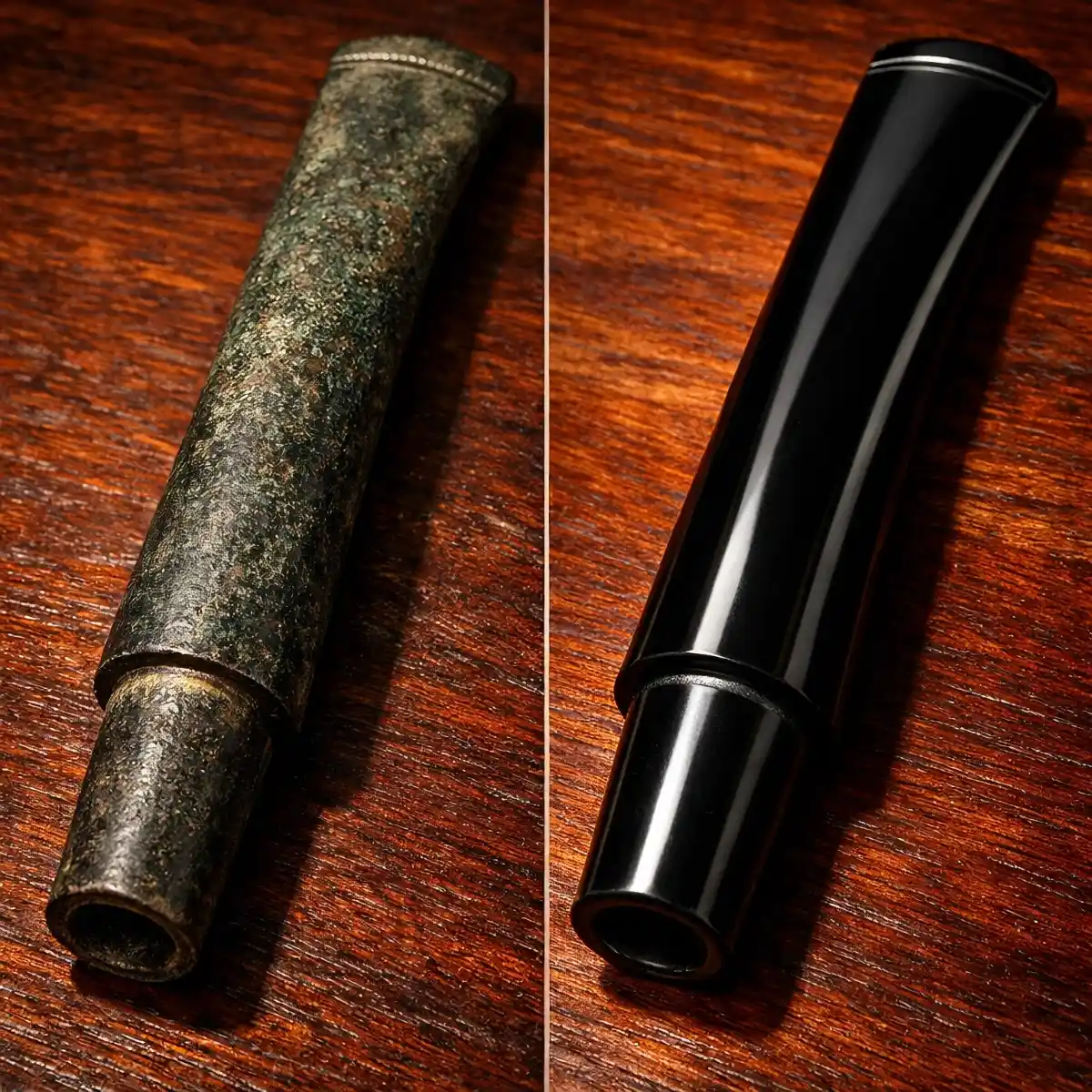
Before you start any chemical soaking or aggressive buffing, coat stamped areas with Vaseline or painter’s tape. This creates a protective barrier during soaking and provides a visual reminder during buffing.
And honestly? If you’re dealing with a valuable pipe or aren’t confident working on it, professional pipe restoration services make sense. We protect every stamp and logo throughout the process; it’s part of our quality control checklist.
## Mistake #6: Storing Your Pipes in Direct Sunlight
Here’s a sneaky one that happens slowly over time.
You finally get your stems looking beautiful again: all that work paid off, and then you store your pipes on a rack near a window. Fast forward six months, and guess what? The oxidation is back.
UV exposure accelerates vulcanite oxidation like crazy. Sunlight is basically kryptonite for your newly restored pipe stems.
Store your pipes in a dark or at least shaded place. A closed cabinet, drawer, or display case away from windows will keep your stems looking fresh much longer.
Pro tip: after you’ve cleaned your stems, treat them with *No Oxi Stick* from Briarville. It creates a protective barrier that slows down oxidation between uses. Think of it as sunscreen for your pipe stems (except, you know, don’t actually use sunscreen on your pipes).
## Mistake #7: Using the Same Method for Every Oxidation Level
Not all oxidation is created equal.
Light surface haze? That’s different from deep green oxidation that’s been sitting for decades. And treating them both the same way is a recipe for either overworking a lightly oxidized stem or under-treating a heavily oxidized one.
For minor surface oxidation, you might only need some buffing compound and elbow grease. But heavy oxidation? That’s the full treatment: overnight soaking, scrubbing, sanding through progressively finer grits (600, 800, 1000), buffing with appropriate compounds, and then waxing or oiling.
There’s no one-size-fits-all approach to smoking pipe repair. You’ve got to assess each stem individually and adjust your technique accordingly.
[Proper pipe storage in a display cabinet away from direct sunlight to prevent oxidation]

This is where experience really matters. After working on thousands of pipes, you develop an eye for what each stem needs. We see everything from light oxidation on well-maintained pipes to estate finds that look like they’ve been buried in a garden for twenty years.
## The Right Way Forward
Look, vulcanite oxidation is just part of owning a pipe. It’s going to happen, especially if you actually smoke your pipes (which, you know, is the point).
The key is knowing how to address it properly without causing more damage than the oxidation itself. When possible, avoid harsh chemicals, use proper mechanical techniques, protect your stampings, and use products designed specifically for pipe stem repair.
And if you’re ever unsure or dealing with a particularly valuable pipe? Don’t experiment. Professional pipe restoration exists for a reason. We’ve seen too many DIY disasters where someone followed sketchy internet advice and turned a fixable problem into an expensive stem replacement situation.
Whether you’re handling it yourself or sending pipes our way at [Briarville](https://briarville.com), remember: patience and proper technique beat aggressive quick fixes every time.
Your pipes will thank you.