The New Smokers Guide – How to Enjoy Your Pipe Without the Bite

So you’ve picked up your first pipe (or maybe you’re about to). Maybe it’s a beautiful estate find from an auction, or a shiny new briar from your local tobacconist. Either way, you’re excited to fire that baby up and enjoy the relaxing ritual everyone talks about.
Then you take your first few puffs.
And your tongue feels like you just licked a hot stove.
Welcome to “tongue bite,” friend. It’s the #1 complaint from folks new to beginner pipe smoking, and the good news? It’s almost always preventable once you know what you’re doing.
Let’s walk through how to enjoy your pipe the right way, without the pain, without the frustration, and with all the pleasure this hobby offers.
What the Heck Is Tongue Bite (and Why Does It Happen)?
Tongue bite is that sharp, stinging sensation you get on your tongue after smoking. Sometimes it shows up mid-bowl. Sometimes it sneaks up on you hours later. Either way, it’s not fun.
Here’s the thing: tongue bite isn’t about the tobacco (well, not usually). It’s about heat and moisture. When you smoke too hot or too fast, the steam and heat from the burning tobacco irritate the delicate tissue in your mouth. Add in some chemical irritation from certain tobaccos or bad packing, and you’ve got yourself a recipe for pain.
The good news? Once you dial in your technique, tongue bite becomes a rare visitor instead of a regular houseguest.
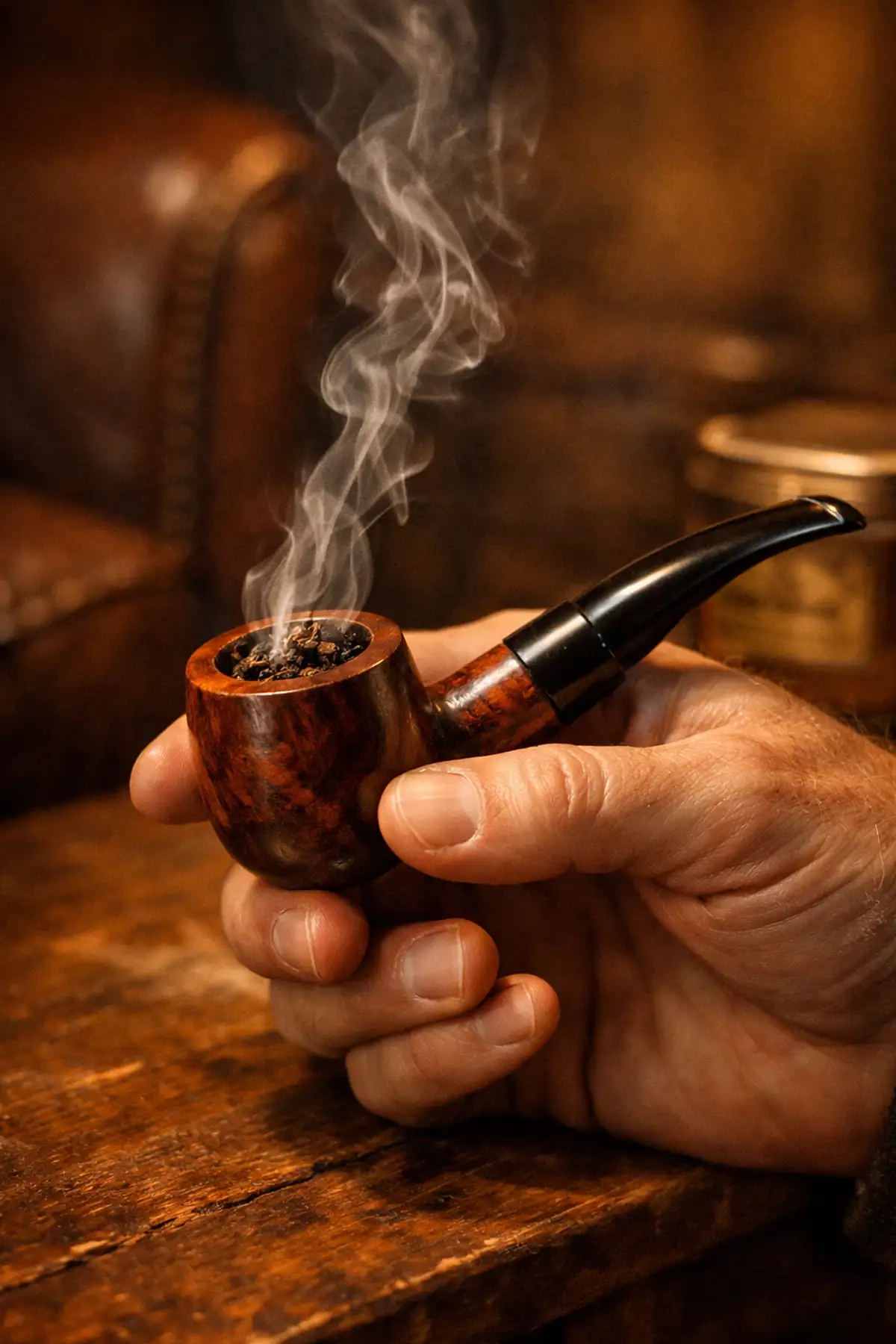
Start With the Foundation: Pack It Right
If there’s one thing that separates a good smoke from a miserable one, it’s the pack.
Too loose? Your tobacco burns like a bonfire, and you’ll get tongue bite in about three puffs.
Too tight? You’ll spend the whole bowl re-lighting and sucking so hard you’ll give yourself a headache (and probably still get tongue bite from all that concentrated heat).
Most experienced pipers use one of two methods: the three-layer method or the pinch method.
Let’s focus on the three-layer since it’s easier for beginners.
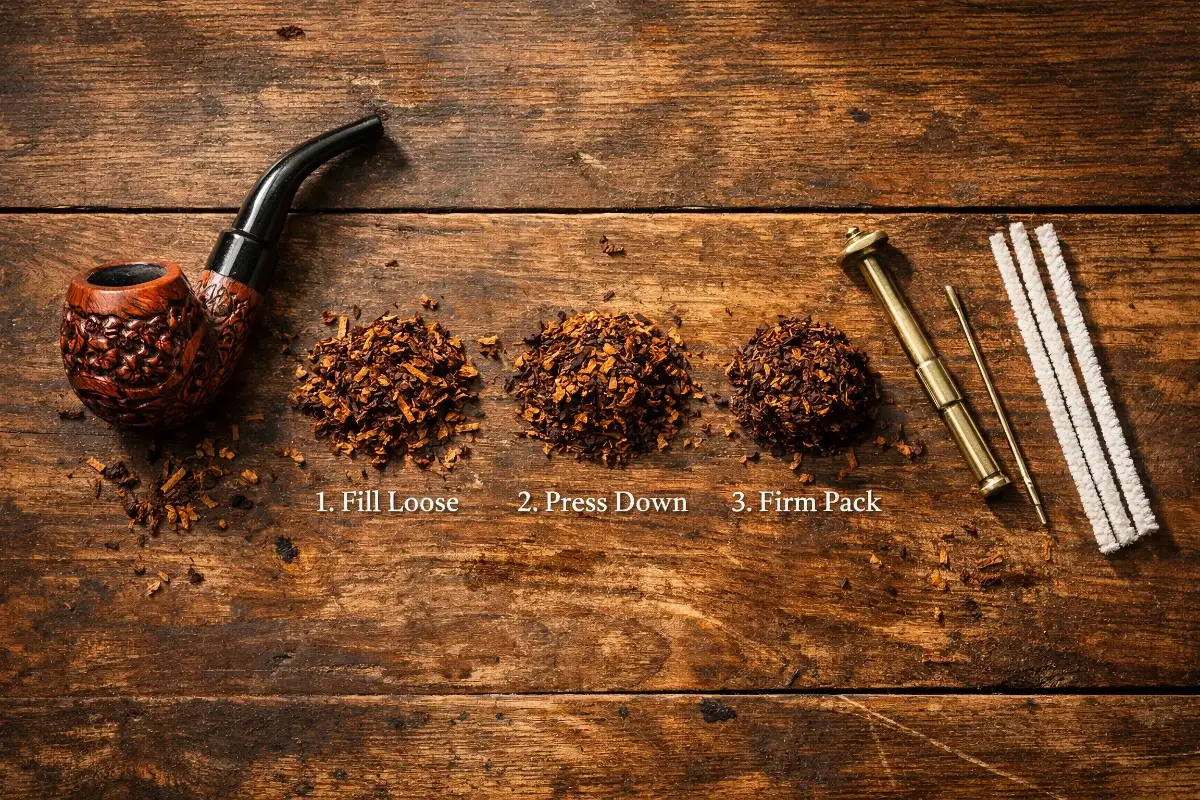
The Three-Layer Method:
1. First layer: Gravity fill your bowl by dropping tobacco in loosely. Don’t push it down yet, just let it fall naturally. Now tamp it down gently until it’s about halfway full.
2. Second layer: Add more tobacco and tamp it down to about three-quarters full. Test your draw by taking a dry puff (no flame yet). It should feel like sipping through a regular drinking straw, not too easy, not too hard.
3. Third layer: Fill to the top and give it one more gentle tamp, leaving just a tiny bit of space at the rim.
Here’s the key: test the draw between each layer. If it feels like sucking a milkshake through a straw, it’s too tight. Dump it out and try again (or use a thin nail to poke a small airway down the center). Ifit feels like pulling air through an empty straw, it’s too loose, add a bit more tobacco or tamp more firmly.
Yeah, it takes practice. We’ve all been there, dumping out half-smoked bowls because the pack was off. That’s part of the learning curve.
Slow Down, Cowboy: The Art of Pacing
Here’s where most new pipe smokers go wrong: they smoke way too fast.
I get it. You’re excited. The tobacco smells amazing. You want to keep that ember going. So you puff, puff, puff, puff, and suddenly your pipe is hotter than a July sidewalk, and your tongue is screaming at you.
Pipe smoking isn’t like cigarettes. You’re not inhaling (seriously, don’t inhale pipe smoke into your lungs, it’s harsh and not what this hobby is about). You’re sipping. Savoring. Basically, having a conversation with your tobacco.
The Golden Rule: Puff just enough to keep it lit.
That might mean one puff every 30 seconds. Maybe every minute. It depends on your pipe, your tobacco, and the weather (yes, really, humidity affects burn rate). The point is to find a rhythm that keeps the bowl gently smoldering without turning it into a furnace.
When in doubt, slow down. If your pipe feels warm to the touch, you’re going too fast.
Light It Like You Mean It (But Not Too Much)
Proper lighting technique makes a huge difference in preventing tongue bite. You’re not trying to torch the entire bowl at once.
Here’s the two-stage approach:
Stage One: The Charring Light
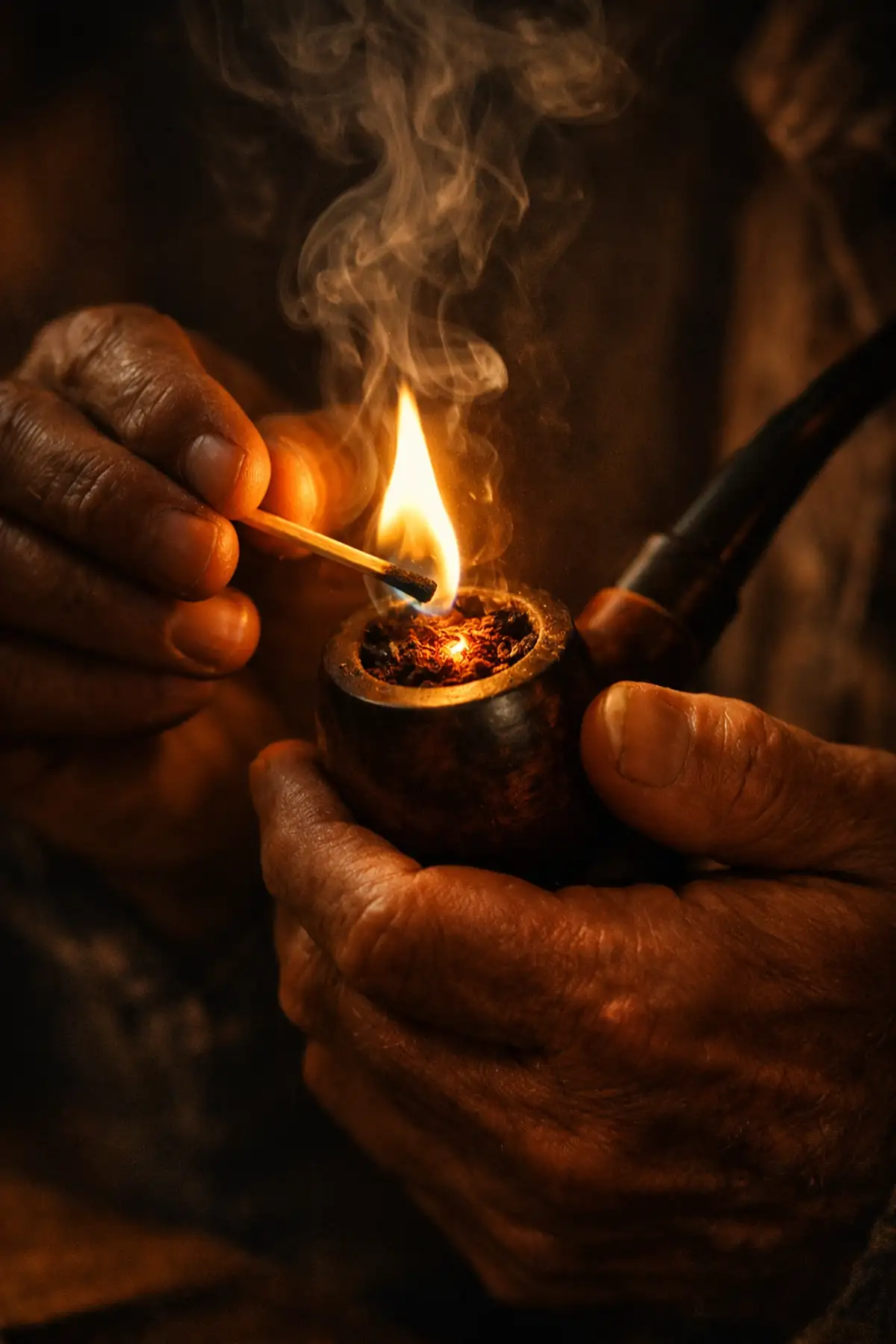
Hold your lighter or match about a half-inch above the tobacco. Take about 5-6 short puffs while moving the flame in a slow circle across the surface. You’re not trying to fully light it here; you’re just creating a charred layer on top.
Tamp that charred layer down gently.
Stage Two: The True Light
Now re-light using slightly deeper, slower puffs. This time you’re establishing a nice, even ember that’ll carry you through the bowl.
Why two stages? Because it helps you achieve an even burn from the start, which means less re-lighting later (and less overheating from constantly hitting it with a flame).
Keep Your Pipe Clean (Seriously)
Here’s something a lot of new pipe smokers don’t realize: a dirty pipe gives you a worse smoke.
Built-up gunk, moisture in the stem, and cake that’s gotten too thick all affect flavor and increase the chances of tongue bite. A well-maintained pipe is essential for a good smoking experience.
After every smoke, run a pipe cleaner through the stem while it’s still slightly warm. Twist it around, get all that moisture out. If you’re smoking multiple bowls in a day, give your pipe a rest between smokes. Let it dry out completely.
And if you’ve got a vulcanite stem (the black, slightly softer material you’ll find on many classic pipes), keep an eye on oxidation. That greenish-brown crud that builds up? Not only does it look bad and taste worse, but it can actually make your smoking experience harsher.
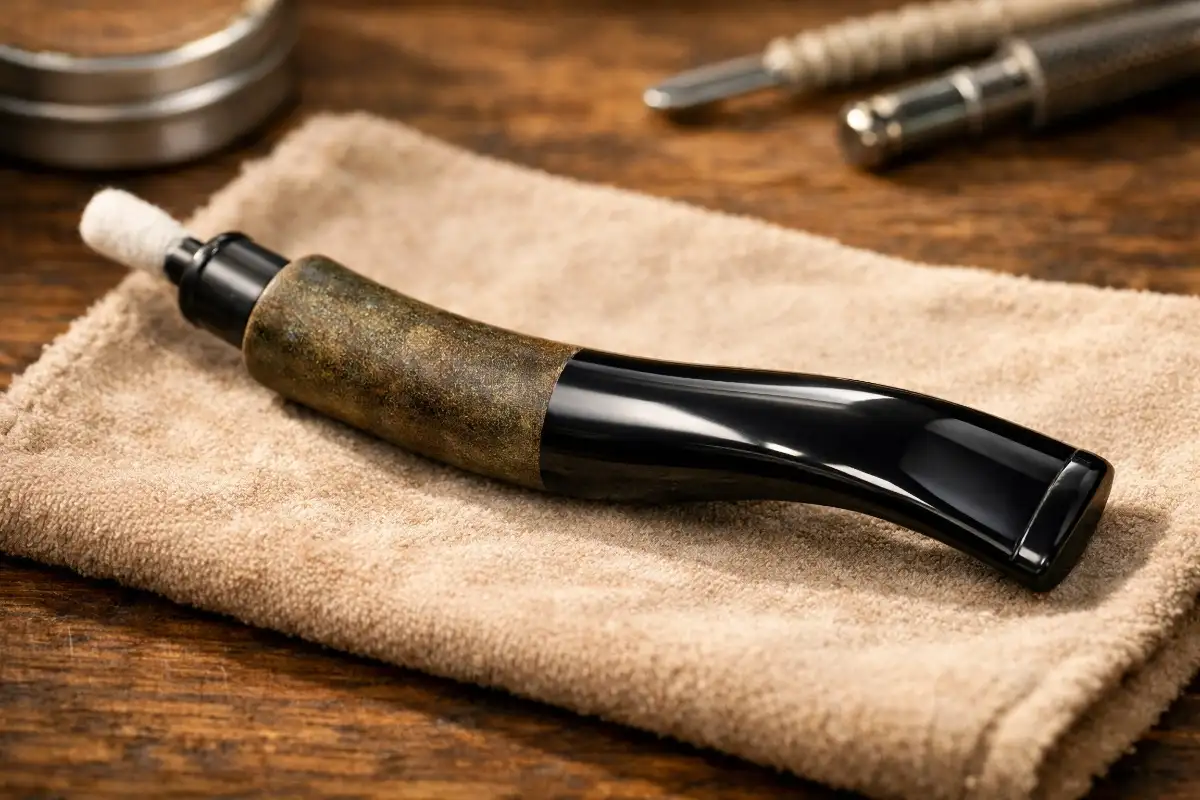
That’s where our No Oxi Stick comes in handy. It’s specifically designed to remove oxidation from vulcanite pipe stems without damaging the material. Just a quick buff every few weeks keeps your stem looking sharp and smoking smooth. Trust me, clean gear makes for better smokes.
Found a Vintage Gem? Get It Checked Out
One of the coolest parts of getting into pipe smoking is discovering estate pipes, those beautiful vintage pieces with character and history. Maybe you scored a Dunhill at an estate sale, or your grandfather’s old Savinelli is sitting in a drawer somewhere.
Before you load that new-to-you pipe up, though, take a good look at it. Does the stem fit snugly? Are there cracks in the bowl? Is there a layer of cake inside that’s thick enough to park a car on?
Vintage pipes often need a little love before they’re ready to smoke. That’s where pipe restoration comes in. Sometimes it’s just a deep cleaning. Sometimes it needs a new stem or a rim repair.
We do this stuff every day at Briarville, and honestly, pipe repair is as close as your mailbox. Send us your pipe, we’ll give it the TLC it needs, and send it back ready to smoke. No need to track down a local shop (if you even have one nearby). We’ve got you covered.
The Smoke Itself: How to Actually Puff
Quick but important point: don’t inhale pipe smoke into your lungs.
Pipe tobacco isn’t meant for that. Instead, you’re drawing the smoke into your mouth, letting it roll around a bit (that’s where you taste all those flavors everyone raves about), and then exhaling it back out. Some folks let a tiny bit drift into their nose on the exhale, that’s called “retrohaling,” and it can
really open up the flavor profile, but that’s advanced stuff. Don’t worry about it yet. The key is keeping that smoke cool. Slow puffs. Gentle draws. Let the pipe do its thing without forcing it.
A Few Final Pointers
Let your pipe rest. Don’t smoke the same pipe more than once a day if you can help it. Briar needs time to dry out between smokes. If you’re planning to smoke regularly, pick up 2-3 pipes and rotate them.
Experiment with tobaccos. Some blends are known for being “bitey” (looking at you, straight Virginia flakes). Start with something mild; many beginners have good luck with aromatic blends or English mixtures that contain some Latakia.
Join the community. Whether it’s online forums, local pipe clubs, or just chatting with the folks at your tobacconist, you’ll learn more from other pipers than any article can teach you. We’re a friendly bunch, and we’ve all been exactly where you are now.
You’ve Got This
Look, beginner pipe smoking comes with a learning curve. You’re going to pack a bowl wrong.
You’re going to smoke too fast at least once. You might even get a little tongue bite along the way.
That’s okay. It’s all part of the journey.
The important thing is to slow down, pay attention to what your pipe is telling you, and give yourself permission to learn. Keep your gear clean (hello, No Oxi Stick), don’t be afraid to ask for help when you need it, and, most importantly, enjoy the ritual.
This hobby is about relaxation, contemplation, and savoring the moment. Once you dial in your technique, you’ll wonder why you didn’t start sooner.Now go pack that pipe and take your time with it. We’ll be here if you need us.